Current | People | PhD Students | PostDoc
Usman Nazir
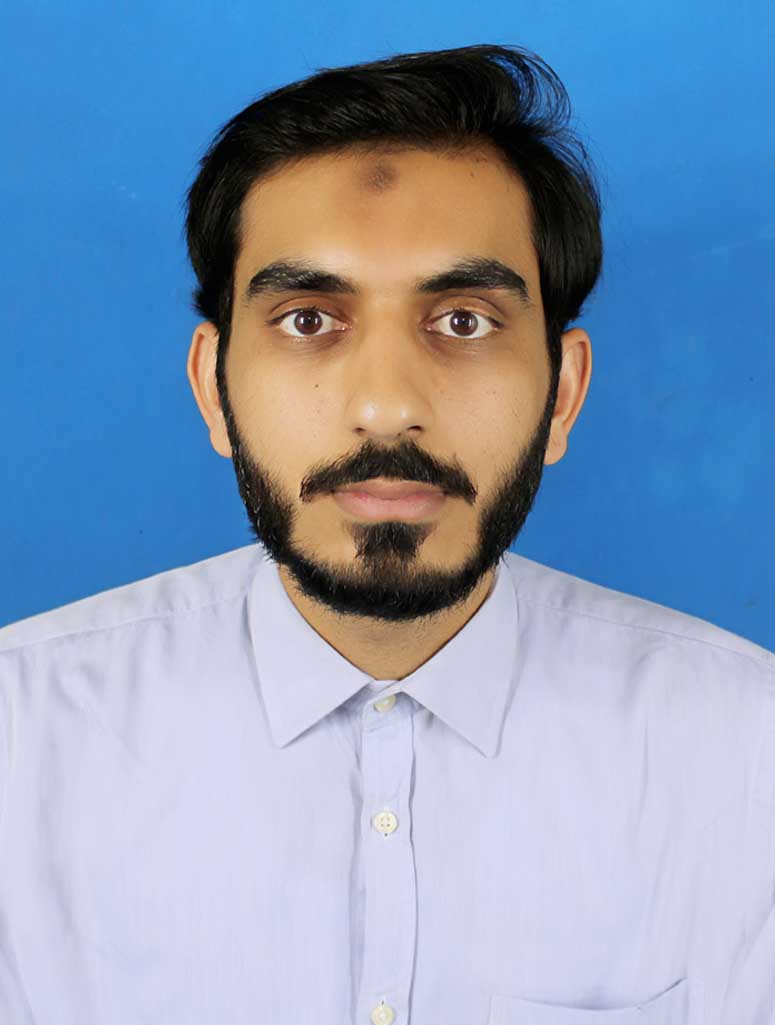
Usman Nazir is a PhD Student in Computer Vision & Graphics Lab (cvglab) at LUMS Syed Babar Ali School of Science and Engineering.
Usman Nazir is a PhD Student in Computer Vision & Graphics Lab (cvglab) at LUMS Syed Babar Ali School of Science and Engineering.
Learning Socio-economic Indicators from Remote Sensing Data Thursday 12 Sep, 2019 at 03:30 am in CS Smart Room 9-105 SBASSE. Abstract Progress on the UN Sustainable Development Goals (SDGs) is hampered by a persistent lack of data regarding key social, environmental, and economic indicators, particularly in developing countries. For example, data on poverty and slavery,…
M Fakhir Khan was a Research Assistant in Computer Vision Lab (cvlab) at LUMS Syed Babar Ali School of Science and Engineering. Research Interest M. Fakhir Khan received the B.S. degree in Mechatronics and Control Engineering from the University of Engineering and Technology, Lahore, Pakistan, in 2015, and the M.S. degree in Electrical Engineering from…

Muhammad Umair Haider and Murtaza Taj Abstract: One of the major challenges in deploying deep neural network architectures is their size which has an adverse effect on their inference time and memory requirements. Deep CNNs can either be pruned width-wise by removing filters or depth-wise by removing layers and blocks. Width wise pruning (filter pruning)…
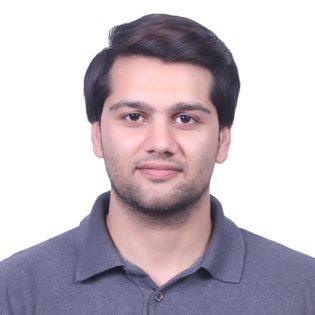
M. Wadood Islam was an MS-CS student at LUMS and a Graduate Research Assistant at Computer Vision and Graphics Lab (CVGL), LUMS Syed Babar Ali School of Science and Engineering. He earned his undergraduate degree from FAST-NUCES in Computer Science. His research interests include machine learning, deep learning, computer vision, and bioinformatics. He worked on classifying…
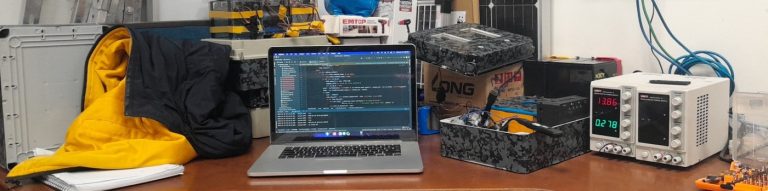
Research Associate | Full Stack Developer | Web Scraping and Automation Expert | Certified DL & ML Specialist Muhammad Muqsit Islam is a full-stack developer proficient in Web Development, Computer Vision, and Deep Learning. They are skilled in Django, Django Rest Framework, React, Flask, TensorFlow, Docker and other technologies, effectively bridging the gap between frontend…
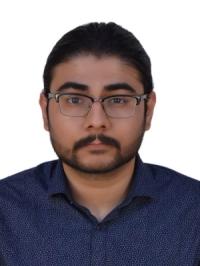
M. Ahmed Bhimra is a MS Thesis student in Computer Vision & Graphics Lab (cvglab) at LUMS Syed Babar Ali School of Science and Engineering.