Paper accepted at BMVC 2021

Our paper titled “Teacher-Class Network: A Neural Network Compression Mechanism” accepted at BMVC 2021.
This work was an outcome of MS Thesis by Shaiq Munir
More info: Click here
Our paper titled “Teacher-Class Network: A Neural Network Compression Mechanism” accepted at BMVC 2021.
This work was an outcome of MS Thesis by Shaiq Munir
More info: Click here

Group Photo, a project at CV Lab by Aamer Zaheer, Ali Rehan, Abdur Rehman Naeem and Maria Zubair, won the first position at Startup Weekend Lahore. Group Photo android app solved the age-old problem that while taking a photograph of a group of friends, the photographer is missed out in the picture. The app, which…
The Computer Vision Lab hosted a rigorous summer internship program for undergraduate students. Sophomore, Junior and Senior interns worked for 2 months in the lab, under the supervision of faculty and PhD students. The students worked both individually and in groups, on a range of ideas, from making a campus 3D model to automatic generation…

Our paper titled “Stereoential Net: Deep Network for Learning Building Height Using Stereo Imagery” accepted at ICONIP 2023. This work was an outcome of PhD Thesis by Sana Jabbar More info: Click here
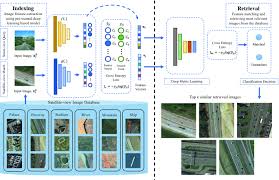
Three papers have been accepted at “International Conference on Neural Information Processing – 19 (ICONIP-19)”. This conference is ranked A by the CORE rating measure and is going to be held from 12th to 15th December 2019 in Sydney, Australia. “Cross-view Image Retrieval – Ground to Aerial Image Retrieval through Deep Learning” “Patch-based Generative Adversarial Network…

PhD (Stipend, Fees) 2 x PhD Position in Agriculture Robotics, Machine Learning, Computer Vision 2 x PhD Position in Satellite Imagery, Deep Learning, Image Processing MS (Stipend) 2 x MS Position in Agriculture Robotics, Machine Learning, Computer Vision 2 x MS Position in Satellite Imagery, Deep Learning, Image Processing How To Apply: Email: murtaza.taj@lums.edu.pk Apply Online: https://admissions.lums.edu.pk/

Challenging the dogma of Relevance Feedback in Content based Image Retrieval Systems with Deep Learning May, 2018 at 3:00 pm in Smart Room 9-105 SBASSE. Abstract Association of images to their content based similar images in a database, is quite a fascinating challenge specially on social media platform where billions of tagged and untagged images…