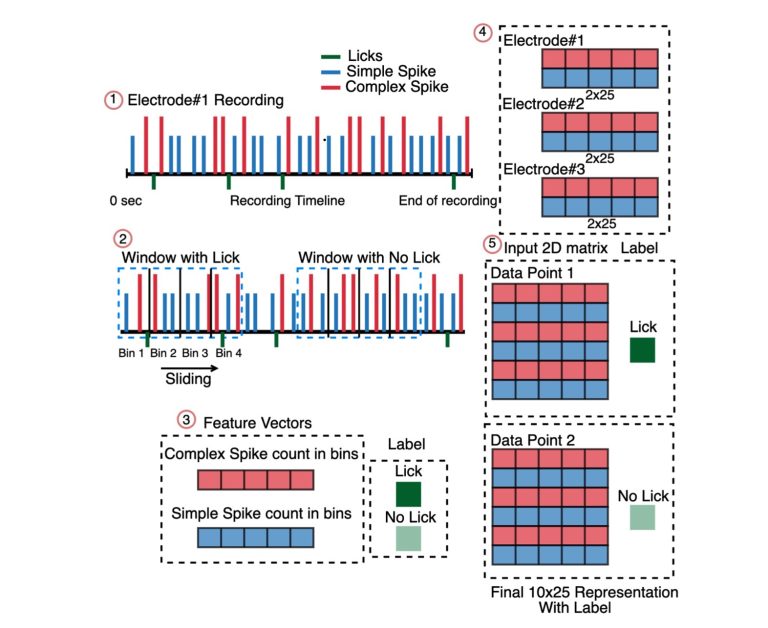
ICASSP2026 – Deep Spatio-Temporal Models for Decoding Purkinje Cell Activity in Tongue Movements
|

ICASSP2026 – Deep Spatio-Temporal Models for Decoding Purkinje Cell Activity in Tongue Movements

Muhammad Zeeshan, Lorenzo Bina, Laurens WJ Bosman, Chris I De Zeeuw, Muhammad Ali Siddiqi, Murtaza Taj Abstract: Decoding cerebellar activity is crucial for understanding the neural basis of motor control and for advancing brain–computer interface (BCI) research. In this work, we investigate whether spike activity from Purkinje cells can be used to classify targeted licking…
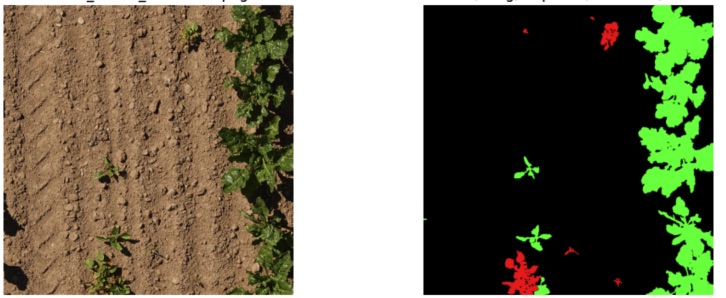
AVSS2026 – UAV-Based Crop–Weed Field Monitoring with EMA-Guided Multi-Head Segmentation and Look-Twice Refinement
|

AVSS2026 – UAV-Based Crop–Weed Field Monitoring with EMA-Guided Multi-Head Segmentation and Look-Twice Refinement

Minahil Fatima, Musaib Ahmed, Fezan Rasool, Murtaza Taj Abstract: Accurate plant phenotyping is critical for precision agriculture, supporting robust weed management, crop monitoring, and sustainable yield optimization. However, crop–weed semantic segmentation in field environments remains challenging due to severe class imbalance, overlapping plant structures, ambiguous boundaries, and the small, camouflaged nature of weeds. We propose…

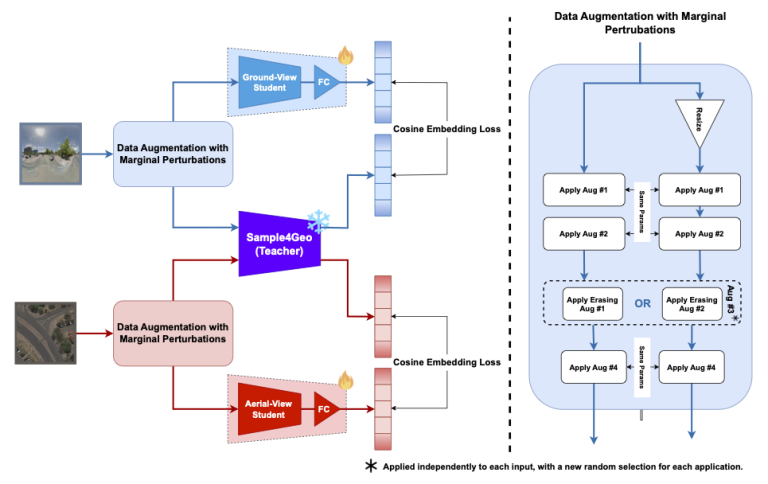
ICONIP2026 – Distill4Geo: Streamlined Knowledge Transfer from Contrastive Weight-Sharing Teachers to Independent, Lightweight View Experts
|

ICONIP2026 – Distill4Geo: Streamlined Knowledge Transfer from Contrastive Weight-Sharing Teachers to Independent, Lightweight View Experts

Muhammad Haad Zaid, Murtaza Taj Abstract: Cross-View Geo-Localization (CVGL) aims to align images from different perspectives (e.g., satellite and street views) to a shared geographic location—a complex task due to variations in viewpoint, intricate scene geometry, and visual discrepancies across views. Current methods commonly employ contrastive loss, which requires matching and non-matching (negative) pairs and…

MICCAI2025 – Localization Lens for Improving Medical Vision-Language Models
|

MICCAI2025 – Localization Lens for Improving Medical Vision-Language Models

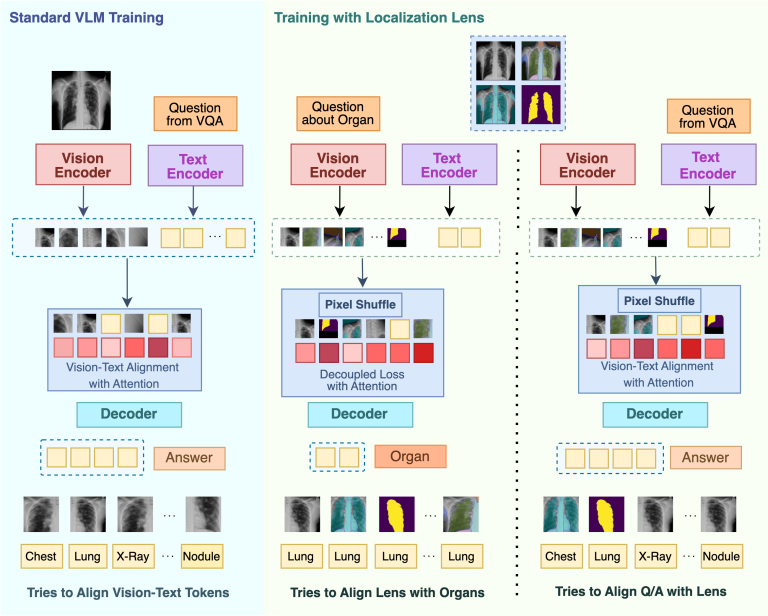
Hasan Farooq, Murtaza Taj, Mehwish Nasim, Arif Mahmood Abstract: Medical Vision-Language Models (Med-VLMs) have demonstrated strong capabilities in clinical tasks. However, they often struggle to understand anatomical structures and spatial positioning, which are crucial for medical reasoning. To address this, we propose a localization-aware enhancement to the Med-VLM pipeline, introducing improvements at three levels: data,…

MICCAI2025 – CATVis: Context-Aware Thought Visualization
|

MICCAI2025 – CATVis: Context-Aware Thought Visualization

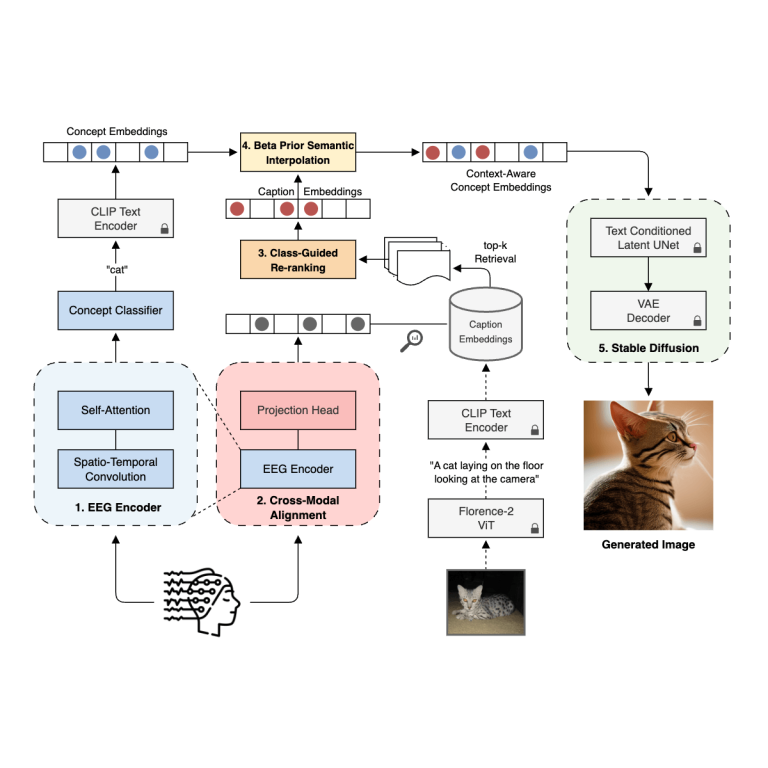
Tariq Mehmood*, Hamza Ahmad*, Muhammad Haroon Shakeel, Murtaza Taj (* contributed equally) Abstract: EEG-based brain-computer interfaces (BCIs) have shown promise in various applications, such as motor imagery and cognitive state monitoring. However, decoding visual representations from EEG signals remains a significant challenge due to their complex and noisy nature. We thus propose a novel 5-stage…

AAAI2023 – Spatio-Temporal driven Attention Graph Neural Network with Block Adjacency matrix (STAG-NN-BA) for Remote Land-use Change Detection
|

AAAI2023 – Spatio-Temporal driven Attention Graph Neural Network with Block Adjacency matrix (STAG-NN-BA) for Remote Land-use Change Detection

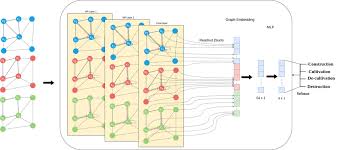
Usman Nazir, Wadood Islam, Sara Khalid, Murtaza Taj Abstract: Land-use monitoring is fundamental for spatial planning, particularly in view of compound impacts of growing global populations and climate change. Despite existing applications of deep learning in land use monitoring, standard convolutional kernels in deep neural networks limit the applications of these networks to the Euclidean…

|

ICONIP2023 – Stereoential Net: Deep Network for Learning Building Height Using Stereo Imagery

Sana Jabbar, Murtaza Taj Abstract: Height estimation plays a crucial role in the planning and assessment of urban development, enabling effective decision-making and evaluation of urban built areas. Accurate estimation of building heights from remote sensing optical imagery poses significant challenges in preserving both the overall structure of complex scenes and the elevation details of…

ICPR2022 – Neural Network Pruning Through Constrained Reinforcement Learning
|

ICPR2022 – Neural Network Pruning Through Constrained Reinforcement Learning

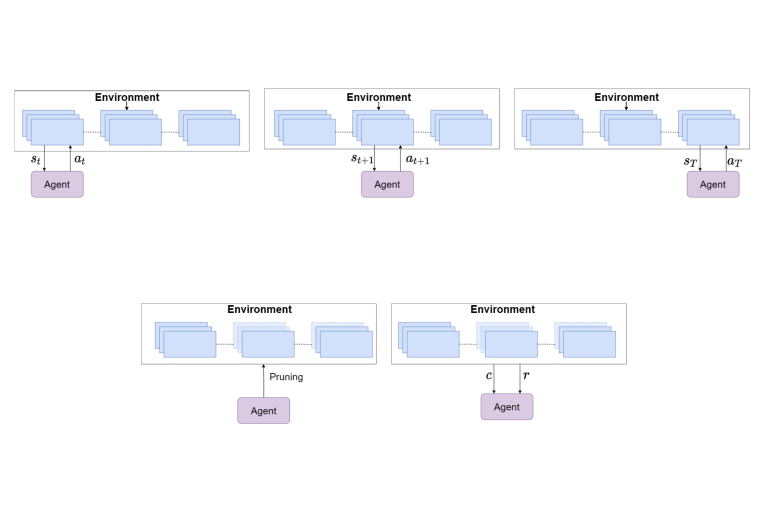
Shehryar Malik, Muhammad Umair Haider*, Omer Iqbal, Murtaza Taj Abstract: Network pruning reduces the size of neural networks by removing (pruning) neurons such that the performance drop is minimal. Traditional pruning approaches focus on designing metrics to quantify the usefulness of a neuron which is often quite tedious and sub-optimal. More recent approaches have instead…

ICASSP2022 -Camera Calibration through Camera Projection Loss
|

ICASSP2022 -Camera Calibration through Camera Projection Loss

Talha Hanif Butt, Murtaza Taj Abstract: Camera calibration is a necessity in various tasks including 3D reconstruction, hand-eye coordination for a robotic interaction, autonomous driving, etc. In this work we propose a novel method to predict extrinsic (baseline, pitch, and translation), intrinsic (focal length and principal point offset) parameters using an image pair. Unlike existing…

BMVC2021 – Teacher-Class Network: A Neural Network Compression Mechanism
|

BMVC2021 – Teacher-Class Network: A Neural Network Compression Mechanism

Shaiq Munir Malik, Fnu Mohbat, Muhammad Umair Haider, Muhammad Musab Rasheed and Murtaza Taj Abstract: To reduce the overwhelming size of Deep Neural Networks, teacher-student techniques aim to transfer knowledge from a complex teacher network to a simple student network. We instead propose a novel method called the teacher-class network consisting of a single teacher…